
Eight Ways to Summon Hope in a Threatened World
Is there an inevitable diminution of beauty over time?

I live in Provo, Utah, and I love it.
It’s not a town on most people’s list of must-see places, but, let me explain my raging love for this place.
It has roots in Colorado, where I had a charmed childhood, spending hours after school on my pink and purple Huffy bike endlessly exploring — watching birds and bugs and streams. Heading for a certain copse of trees and pretending I was in Terabithia with my loyal Keeshond. I learned to ride horses, fly over jumps, look forward to the smell of oats mixed with oil. I didn’t have to pretend to be a mountain girl by wearing a lot of Patagonia: I was a girl and I was in the mountains. The mountains raised me.
When I left home to attend college in Provo — my first introduction to the place was the mountains, they jut straight up without any preamble, but their peace had a familiar homecoming. If my studies got overwhelming, I headed for the hills, just like back home. Usually Provo Canyon, but sometimes the back road around Utah Lake to watch the pelicans.
Life rolled on, I married, left the west for Cleveland then Ann Arbor, Michigan, followed by San Antonio and Alexandria, Virginia.
I found little wild refuges in each place, but I missed the mountains with a fierceness that I’m not sure how to describe. It’s that itch in your soul you just can’t reach, where you know something is off, but you can’t fix it, can’t satisfy it.
When I had a chance to move back west, I turned in notice and packed up in two weeks. Could not get here fast enough.
I live close enough to Rock Canyon to head there every morning. The sun slides out from behind the peak, glancing off the top of nearby Mt. Timpanogos. I brush my fingers along the rocks, hear the calls of the world waking. The mountains are prayer, they are divinity made corporeal.
I spent childhood summers up Provo Canyon, college nights and weekends, and now the canyon is the conduit from the mess of life to the peace of wild things, as Wendell Berry writes.
I want to call Provo Canyon one of my heart’s arteries, but you might think me dramatic. If anything, it would be understatement.
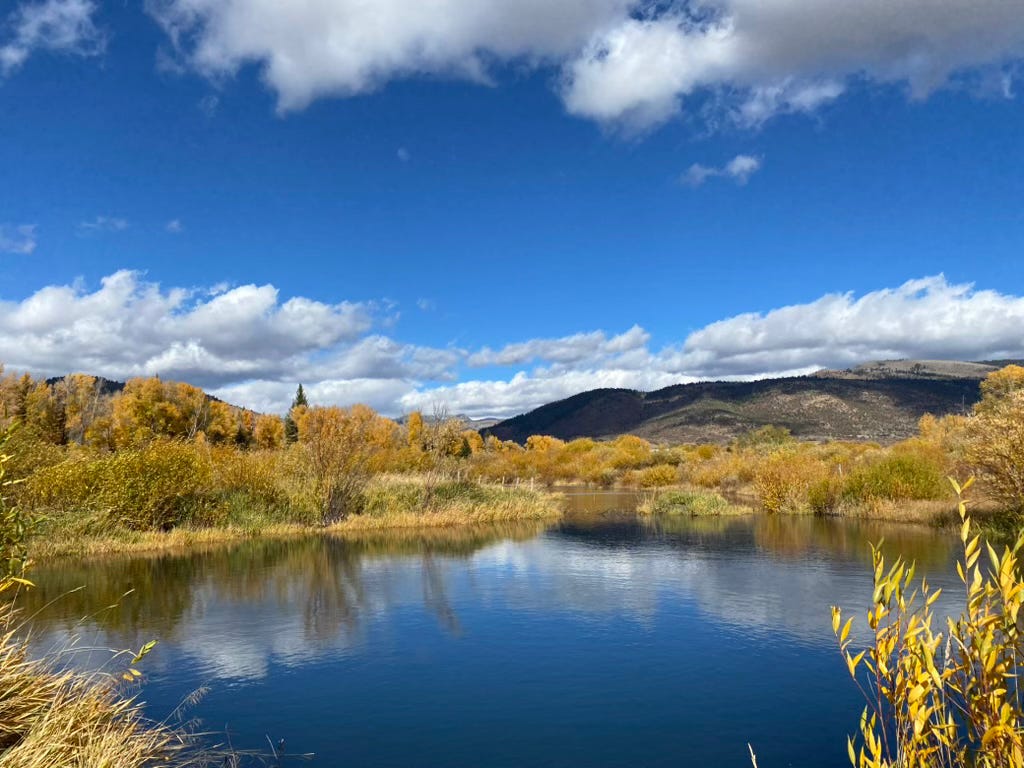
That said, let’s turn back to the title of this piece.
What do I do when a place I love like part of my body, part of my family, part of my ability to stay sane on earth, is threatened?
I don’t know!
And that’s what’s happening!
Recently, our local officials in Provo announced The Vesper Amphitheater Project. (I think I’ve mentioned it before, but it’s constantly on my mind right now.) This is a 20,000 seat amphitheater that would sit at the mouth of Provo Canyon. And while I get personal about this canyon, I think it’s worth confronting this project no matter where you live, because, more than likely, there’s something like this slated for a wild place near you.
“The only spiritually responsible way I know to be a citizen, artist, or activist, is by giving little or no thought to things such as saving the planet, achieving world peace, or stopping neocon greed. Great things seem undoable things.
Small things, lovingly done, are always within our reach.”
— David James Duncan
I’m devastated by this Vesper Project and how enthusiastic my local officials are about it.
I’m huge live music fan, but this is the wrong place for a mega-amphitheater, hotel, and shopping complex. There is only one road in and out of Provo Canyon, and it’s miles from a freeway. All I can see from this project is loss. Losing birds, plants, insects to pavement. Losing the sounds of the earth to traffic. Losing the access to the Uintahs for the weekend because of the difficulty getting through the canyon.
I’m not calling myself any kind of expert on gravel pits or city planning or amphitheaters, but I am calling myself a person who loves the canyon. This project (which is much more moveable and scalable than a canyon) is not the right thing for the single road from Provo to the wild spaces to the east. Any time I think about it, I get sick to my stomach. I get depressed for me and my kids and all the kids and people in this area who won’t be able to get to the mountains when they need to.
The story of the earth can still be a story of beauty and love, as long as the people who still respect wild places keep showing their love for that wild beauty.
I just finished Hank Lentfer’s memoir Faith of Cranes this week. I think he wrote it for me. He chronicles his devastation at the devastation of the natural places around him and across the world to his arrival at a kind of equilibrium, realizing that the most important thing he can do is love the places that mean something to him.
Here are my eight attempts to grope for hope in times like these: where the people we’ve elected to protect not just the city, but the natural world that interweaves and surrounds it, put profit over any other consideration. (A phenomenon that certainly isn’t limited to my beloved canyon.) Many thanks to Hank Lentfer for this inspiration:
Is the world going to be eclipsed by the gears of the Industrial Revolution that remain hell-bent on processing beauty into a money-making venture?
What can I do when the wild places around me are threatened by commercial development without regard environmental impact?A lot gets buried underneath pavement.
How do we notice and love what’s already there before deciding it should be a hotel?“I [Hank Lentfer] have been motivated, like so many people, by what Scott Russell Sanders calls the ‘bite of conscience.’ But what happens when the cries swell beyond our ability to respond? How do we keep from being buried by a swelling sense of failure?”1
Or what happens when the people we elect to steward the earth can no longer hear the bite of conscience?Insanity often passes for progress.
How do you live a life so that joy remains when all else fades?2
“Hope, however feeble its foundation, bespeaks allegiance to every unlikely beauty that remains on earth.” — David James Duncan
“The only spiritually responsible way I know to be a citizen, artist, or activist, is by giving little or no thought to things such as saving the planet, achieving world peace, or stopping neocon greed. Great things seem undoable things. Small things, lovingly done, are always within our reach.”
— David James DuncanSo, dear Mayor Judkins, the Provo City Planning Commission, the Provo City Council, Vesper Project Planners, here’s my question: Are you pushing for the Vesper Amphitheater out of love? Love for this place, for Provo Canyon, for the mountains and the countless living things that call that place home?
If you feel like this is a project born of love, can you show me what you love?
I have a feeling that the things you love most about this project are money, money, development, and cash.
Why do you want your legacy in office to be the development of a natural Provo treasure?
I cannot express how utterly disappointed, heartbroken, and disgusted I will be if this project goes through.
But, I also pledge to continue in the spirit of Hank Lentfer, no matter the outcome on this project and countless projects that will likely threaten this same space in the future, to do small acts with great love.
Who knows where those small seeds of love will plant themselves?
The story of the earth can still be a story of beauty and love, as long as the individuals who still respect wild places continue to show their love for that wild beauty.
Will you join me?
Hank Lentfer, Faith of Cranes, page 143
p. 160
captures much of how I’ve been feeling lately. so very well put!